

Natural Daylight Has Become a Critical Element of Modern Architecture
For decades, industrial buildings, schools, sports halls, logistics centers, shopping malls, warehouses, and commercial facilities were designed as enclosed structures heavily dependent on artificial lighting. While these buildings fulfilled their functional requirements, many overlooked one of the most important aspects of human-centered architecture: access to healthy natural daylight.
Today, the construction industry is rapidly evolving toward smarter, healthier, and more sustainable building design. Architects, consultants, developers, and building owners increasingly recognize that natural light is not merely an aesthetic enhancement. It directly impacts occupant wellbeing, productivity, energy efficiency, indoor comfort, and the long-term value of a building.
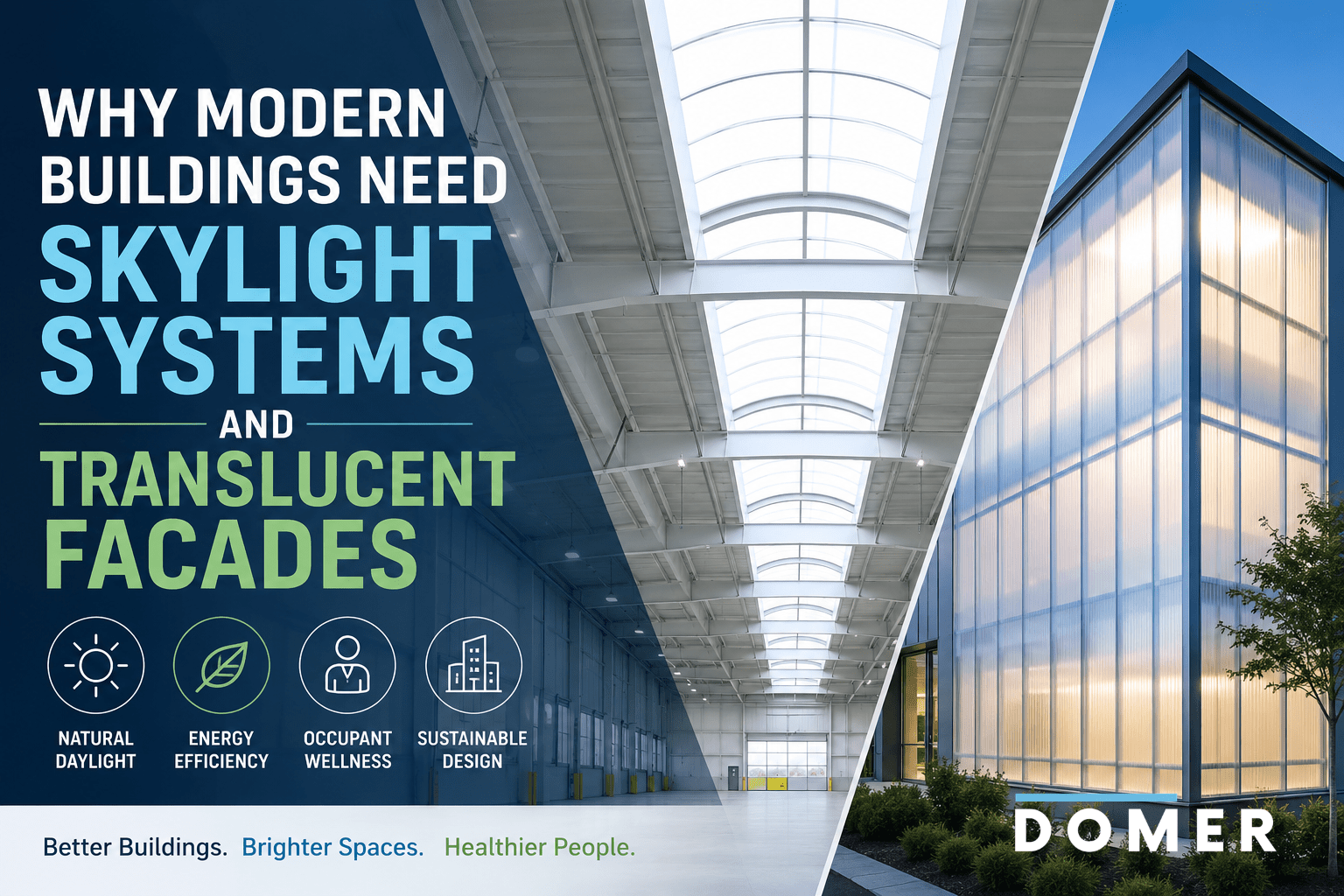
As a result, skylight systems and translucent facade solutions have become essential components of modern building envelopes.
Advanced polycarbonate skylights, fiberglass rooflights, and translucent facade systems are transforming universities, educational facilities, sports complexes, manufacturing plants, warehouses, airports, shopping centers, and commercial developments around the world.
Why Natural Light Matters in Building Design
A building designed without sufficient daylight often creates an environment that feels disconnected, enclosed, and tiring for occupants. Even sophisticated artificial lighting systems struggle to replicate the benefits of natural daylight.
Numerous studies have linked proper daylight exposure with:
- Improved concentration and focus
- Enhanced learning performance
- Increased workplace productivity
- Reduced fatigue
- Better mood and mental wellness
- Lower stress levels
- Improved sleep quality
- Enhanced indoor environmental comfort
These benefits become especially important in buildings where occupants spend extended periods indoors.
In schools and universities, students generally perform better in naturally lit environments. In offices and commercial buildings, employees often report higher satisfaction, improved focus, and increased productivity. Sports facilities benefit from brighter and more inviting spaces that enhance the experience of athletes and visitors alike.
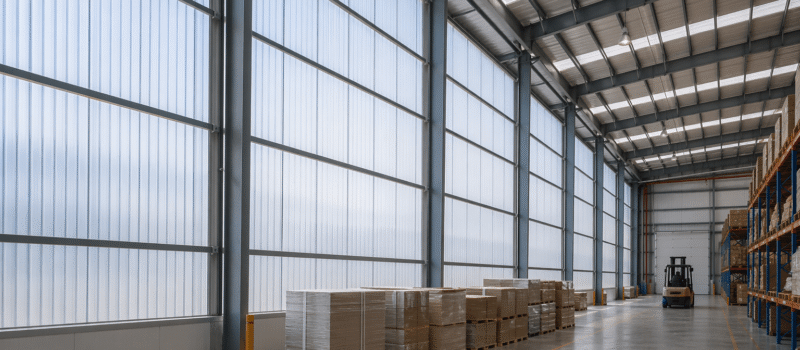
Industrial facilities and logistics warehouses represent another significant opportunity. Large enclosed spaces illuminated entirely by artificial lighting can become visually exhausting for workers. Integrating roof skylights and translucent wall systems helps create a healthier working environment while simultaneously reducing electricity consumption.
The Growing Demand for Skylight Systems in Commercial Buildings
Modern skylight systems have become one of the most effective daylighting strategies available to architects and building designers.
Unlike conventional windows, skylights introduce daylight from above, allowing natural light to penetrate deeper into large interior spaces. This makes them particularly valuable for:
Warehouses and Logistics Centers
Large warehouses often have extensive floor areas where side windows cannot adequately illuminate the center of the building. Roof skylights distribute daylight evenly throughout the space, reducing reliance on artificial lighting during operational hours.
Manufacturing Facilities
Factories benefit from balanced daylight that improves visibility, supports worker comfort, and contributes to safer working conditions.
Sports Arenas and Recreation Facilities
Natural daylight creates a more enjoyable environment for athletes, spectators, and visitors while reducing lighting costs.
Educational Buildings
Schools, colleges, and universities increasingly integrate daylighting systems to create healthier learning environments and support student wellbeing.
Commercial Buildings and Shopping Centers
Daylit retail and commercial environments often feel more welcoming and visually appealing, enhancing the overall user experience.
Modern Skylight Systems Deliver More Than Daylight
Today’s skylight systems are highly engineered building components designed to deliver multiple performance benefits.
Modern skylights can provide:
- Thermal insulation
- Solar heat control
- Weather resistance
- UV protection
- Structural performance
- Fire performance
- Long-term durability
- Energy savings
Rather than functioning as simple roof openings, modern skylight systems contribute directly to building performance, sustainability goals, and occupant comfort.
Why Polycarbonate Skylights Are Becoming the Preferred Choice
Polycarbonate skylight systems have become increasingly popular among architects and consultants due to their exceptional combination of strength, durability, and daylight performance.
Compared to traditional glazing materials, polycarbonate daylighting systems offer several significant advantages:
High Impact Resistance
Polycarbonate is considerably more impact-resistant than glass, making it suitable for demanding commercial and industrial environments.
Excellent Daylight Transmission
Modern multiwall polycarbonate systems allow large amounts of natural daylight into buildings while maintaining occupant comfort.
Reduced Glare
Unlike clear glazing, polycarbonate systems diffuse sunlight evenly, minimizing harsh glare and creating a more comfortable indoor environment.
Superior Thermal Performance
Multiwall polycarbonate panels provide insulation benefits that help reduce cooling and heating loads.
Lightweight Construction
Polycarbonate systems are significantly lighter than glass, reducing structural requirements and simplifying installation.
Long-Term Durability
UV-protected polycarbonate systems can maintain their performance and appearance for many years, even in harsh climates.
These advantages make polycarbonate skylights ideal for:
- Airports
- Shopping malls
- Universities
- Commercial offices
- Sports halls
- Public buildings
- Industrial facilities
In regions with intense solar exposure such as the GCC and Middle East, engineered polycarbonate skylight systems help balance daylight optimization with solar heat control.
Fiberglass Skylights and GRP Daylighting Panels for Industrial Applications
Fiberglass skylights and GRP daylighting panels continue to play an important role in industrial construction.
GRP, which stands for Glass Reinforced Polyester, offers several benefits for industrial daylighting applications:
- Excellent light diffusion
- Corrosion resistance
- Long service life
- Weather resistance
- Cost-effective installation
- Reliable industrial performance
Unlike transparent glazing that can create bright hotspots, fiberglass rooflights distribute daylight more evenly across large industrial spaces.
This creates a more comfortable visual environment for workers while helping reduce daytime lighting costs.
For factories, warehouses, and logistics facilities, GRP skylights remain one of the most practical daylighting solutions available.
How Translucent Facades Are Transforming Modern Buildings
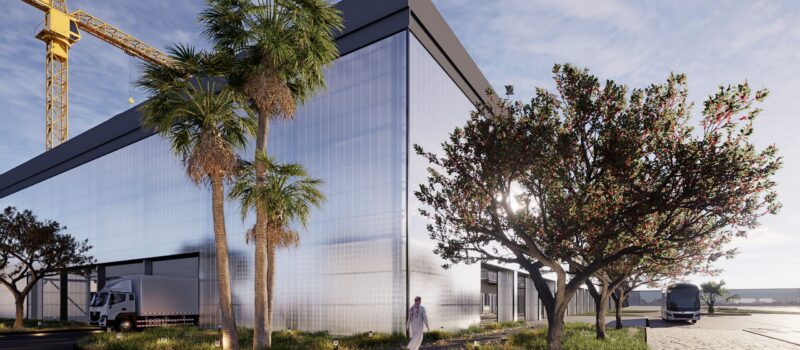
While skylights introduce daylight through the roof, translucent facade systems bring natural light through the building envelope itself.
Traditional glass facades can create challenges such as:
- Excessive glare
- Solar hotspots
- Uneven light distribution
- Increased cooling loads
Translucent polycarbonate facade systems offer an alternative approach by allowing natural light to enter while diffusing direct sunlight.
This creates brighter and more comfortable interiors without many of the drawbacks associated with conventional transparent glazing.
Common Applications for Translucent Facades
Modern translucent facade systems are increasingly used in:
- Universities
- Schools
- Sports complexes
- Office buildings
- Shopping centers
- Transportation facilities
- Public buildings
- Innovation hubs
- Industrial facilities
Architects appreciate these systems because they combine contemporary aesthetics with practical building performance.
Daylighting Supports Sustainable Building Design
As sustainability becomes a central focus in construction, daylighting strategies are gaining increased importance.
Reducing dependence on artificial lighting directly lowers building energy consumption and operational costs.
This is particularly valuable in facilities that operate for extended hours, including warehouses, manufacturing plants, educational buildings, and commercial developments.
Daylighting solutions contribute to sustainability frameworks such as:
- LEED Certification
- WELL Building Standard
- BREEAM
- Estidama
- Dubai Green Building Regulations
- Saudi Green Building initiatives
For developers and building owners, investing in daylighting often delivers both environmental and financial benefits over the building’s lifecycle.
Human-Centered Design Is Driving the Future of Construction
The definition of a successful building has changed dramatically over the past decade.
Historically, performance was measured primarily through structural integrity and energy efficiency. Today, occupant wellbeing has become equally important.
This shift has led architects and consultants to prioritize:
- Daylighting strategies
- Healthy building materials
- Natural ventilation
- Indoor environmental quality
- Sustainable building envelopes
- Occupant wellness
Natural light remains one of the most effective ways to improve how people experience buildings.
Whether someone is learning, working, exercising, shopping, or traveling, access to daylight contributes positively to comfort and performance.
Modern architecture is moving away from dark, enclosed spaces toward healthier, brighter, and more sustainable environments.
The Role of Daylighting in Large Span Buildings
One of the greatest challenges in modern architecture is providing adequate natural light within large-span structures. Buildings such as warehouses, factories, aircraft hangars, exhibition centers, sports arenas, and logistics facilities often feature expansive floor areas that are difficult to illuminate using conventional windows alone.
When daylight enters only through side glazing, the center of the building frequently remains dependent on artificial lighting throughout the day. This increases energy consumption and limits the benefits of natural daylight for occupants.
Skylight systems address this challenge by introducing daylight from the roof, where sunlight can penetrate deeper into the building and provide more uniform illumination across large spaces.
Modern daylight modeling software allows architects and engineers to strategically position skylights throughout a roof structure to optimize daylight distribution, reduce shadows, and minimize energy use. The result is a building that performs more efficiently while creating a more comfortable environment for occupants.
For industrial and commercial facilities operating 10, 12, or even 24 hours per day, effective daylighting can generate substantial energy savings over the lifespan of the building.
Building Envelope Performance and Daylighting Integration
The building envelope plays a critical role in determining how effectively a structure manages daylight, heat, and energy consumption.
Traditionally, architects often faced a tradeoff between maximizing natural light and controlling solar heat gain. Large glass surfaces could introduce daylight but often increase cooling requirements, especially in regions with hot climates.
Modern polycarbonate daylighting systems and translucent facade solutions help solve this challenge by providing a balance between daylight transmission and thermal performance.
Advanced multiwall polycarbonate panels can be engineered to:
- Maximize useful daylight
- Reduce solar heat gain
- Improve thermal insulation
- Limit glare
- Enhance occupant comfort
- Support energy efficiency objectives
This makes them particularly suitable for projects in the Middle East, where buildings must carefully manage both daylight and extreme solar exposure.
As sustainability standards become increasingly stringent, integrated daylighting solutions are becoming a key component of high-performance building envelopes.
Why Architects Are Choosing Translucent Materials
Architectural trends increasingly favor materials that create visually striking buildings while also contributing to building performance.
Translucent facade systems allow architects to achieve both objectives simultaneously.
During the day, translucent facades introduce soft, diffused natural light into interior spaces. At night, these same facades can transform a building into an illuminated architectural feature, creating a distinctive visual identity.
This dual functionality has contributed to the growing popularity of translucent materials in:
- Educational campuses
- Sports complexes
- Transportation hubs
- Cultural facilities
- Commercial developments
- Industrial headquarters
Beyond aesthetics, translucent facade systems provide practical benefits including durability, lightweight construction, impact resistance, and reduced maintenance requirements compared to some traditional facade materials.
As architects continue to pursue innovative building designs, translucent polycarbonate systems are becoming an increasingly important part of the modern architectural toolkit.
Daylighting as a Long-Term Investment
Many building owners initially evaluate skylights and translucent facades based on installation costs. However, the true value of daylighting systems becomes apparent when viewed over the entire lifecycle of the building.
The long-term benefits often include:
- Reduced electricity consumption
- Lower operating costs
- Improved occupant satisfaction
- Increased workplace productivity
- Enhanced building value
- Stronger sustainability credentials
- Better compliance with green building standards
For commercial developers, these benefits can improve tenant satisfaction and building attractiveness. For industrial facilities, they can contribute to employee well-being and operational efficiency. For educational institutions, they support healthier learning environments.
As organizations place greater emphasis on sustainability, wellness, and operational performance, daylighting systems are increasingly viewed not as optional architectural features but as strategic investments that continue delivering value for decades.
The Future of Building Design Is Brighter
Whether it is a university campus, logistics warehouse, manufacturing facility, airport terminal, shopping center, sports arena, or commercial office building, natural daylight has become a defining characteristic of high-performance architecture.
Advanced polycarbonate skylights, fiberglass rooflights, translucent facade systems, and engineered daylighting solutions are helping create buildings that are:
- More productive
- More energy efficient
- More visually comfortable
- More sustainable
- More architecturally appealing
- Better for occupant wellbeing
Natural light is no longer simply a design preference. It has become a fundamental component of modern building performance.
For architects, consultants, developers, and facility owners seeking to create healthier and more efficient spaces, skylight systems and translucent facades represent one of the most effective investments in the future of building design.