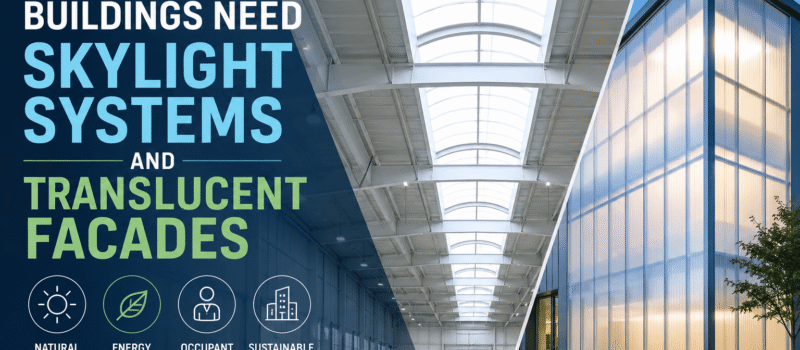


How Modern Skylights and Translucent Facades Support Sustainable Buildings in Dubai
Dubai has rapidly transformed into one of the world’s leading cities for sustainable construction. With ambitious environmental targets, stricter energy efficiency requirements, and a growing focus on occupant wellbeing, architects and developers are increasingly integrating natural daylight into building designs through skylights, translucent roofing systems, and daylighting façades.
However, daylighting in Dubai is not simply about adding more natural light into a building. In a region with intense solar radiation and high ambient temperatures, poorly designed skylights or translucent wall systems can significantly increase cooling loads, glare, and energy consumption.
This is where Dubai’s Green Building Regulations and Specifications play a critical role.
Understanding how these regulations relate to skylights and daylighting systems is essential for consultants, contractors, developers, and building owners aiming to design compliant, energy efficient, and comfortable buildings.
Why Daylighting Matters in Dubai
Natural daylight has become one of the most important elements of modern sustainable architecture. Properly designed daylighting systems can help:
- Reduce dependence on artificial lighting
- Improve occupant comfort and productivity
- Enhance architectural aesthetics
- Lower overall energy consumption
- Contribute toward sustainability certification goals
- Support healthier indoor environments
- Improve visual comfort in large commercial spaces
In commercial and industrial buildings, skylights and translucent façade systems can dramatically reduce daytime electricity usage when engineered correctly.
But in Dubai’s climate, daylight must always be balanced against solar heat gain.
Too much uncontrolled sunlight can increase HVAC demand, create uncomfortable glare, and negatively impact overall building performance.
This is why Dubai regulations focus not only on visible light transmission, but also on thermal efficiency and solar control.
Understanding Dubai Green Building Regulations
Dubai Municipality introduced the Green Building Regulations and Specifications to improve the environmental performance of buildings throughout the Emirate.
The regulations apply to:
- New buildings
- Building extensions
- Certain refurbishment projects
- Government developments
- Private sector projects
The framework addresses several sustainability areas including:
- Energy efficiency
- Water conservation
- Material sustainability
- Indoor environmental quality
- Building envelope performance
For skylights and daylighting systems, the most relevant requirements relate to building envelope efficiency and thermal performance.
These standards encourage project teams to adopt smarter façade and roofing systems capable of reducing operational energy demand while maintaining occupant comfort.
The Role of Skylights in Building Envelope Performance
A skylight is no longer treated merely as an architectural feature. Under modern building regulations, it forms a critical part of the building envelope.
Its performance directly affects:
- Heat transfer into the building
- Solar radiation penetration
- Air infiltration
- Internal cooling demand
- Indoor thermal comfort
- Long-term operational efficiency
As a result, skylight systems must be carefully engineered to comply with project thermal performance targets.
The most important performance indicators include:
| Performance Parameter | Importance |
|---|---|
| U Value | Measures thermal insulation performance |
| Solar Heat Gain Coefficient (SHGC) | Measures solar heat entering the building |
| Visible Light Transmission (VLT) | Determines amount of usable daylight |
| Air Infiltration | Prevents conditioned air leakage |
| Water Tightness | Essential for roof systems |
| Structural Resistance | Ensures wind load compliance |
For Dubai projects, balancing SHGC and VLT is especially important. A high-quality daylighting system should maximize usable natural light while minimizing unwanted heat gain.Why Conventional Skylights Often Fail in Hot Climates
Many older skylight systems used throughout the region were designed primarily to allow light into buildings without sufficient consideration for energy efficiency.
Common problems include:
- Excessive heat buildup
- Yellowing and UV degradation
- High glare levels
- Poor insulation
- Condensation risks
- Water leakage
- Increased HVAC operating costs
In industrial and commercial facilities, poorly performing skylights can turn large buildings into heat traps during summer months.
This is one reason why Dubai developers increasingly prefer engineered daylighting systems instead of basic translucent roof panels.
The Shift Toward High-Performance Daylighting Systems
Today’s projects demand daylighting systems that function as complete engineered building envelope solutions.
Modern skylight and translucent façade systems are expected to deliver:
- Controlled daylight diffusion
- Low solar heat gain
- Improved thermal insulation
- Long-term UV resistance
- Structural reliability
- Fire performance compliance
- Weather resistance
- Minimal maintenance requirements
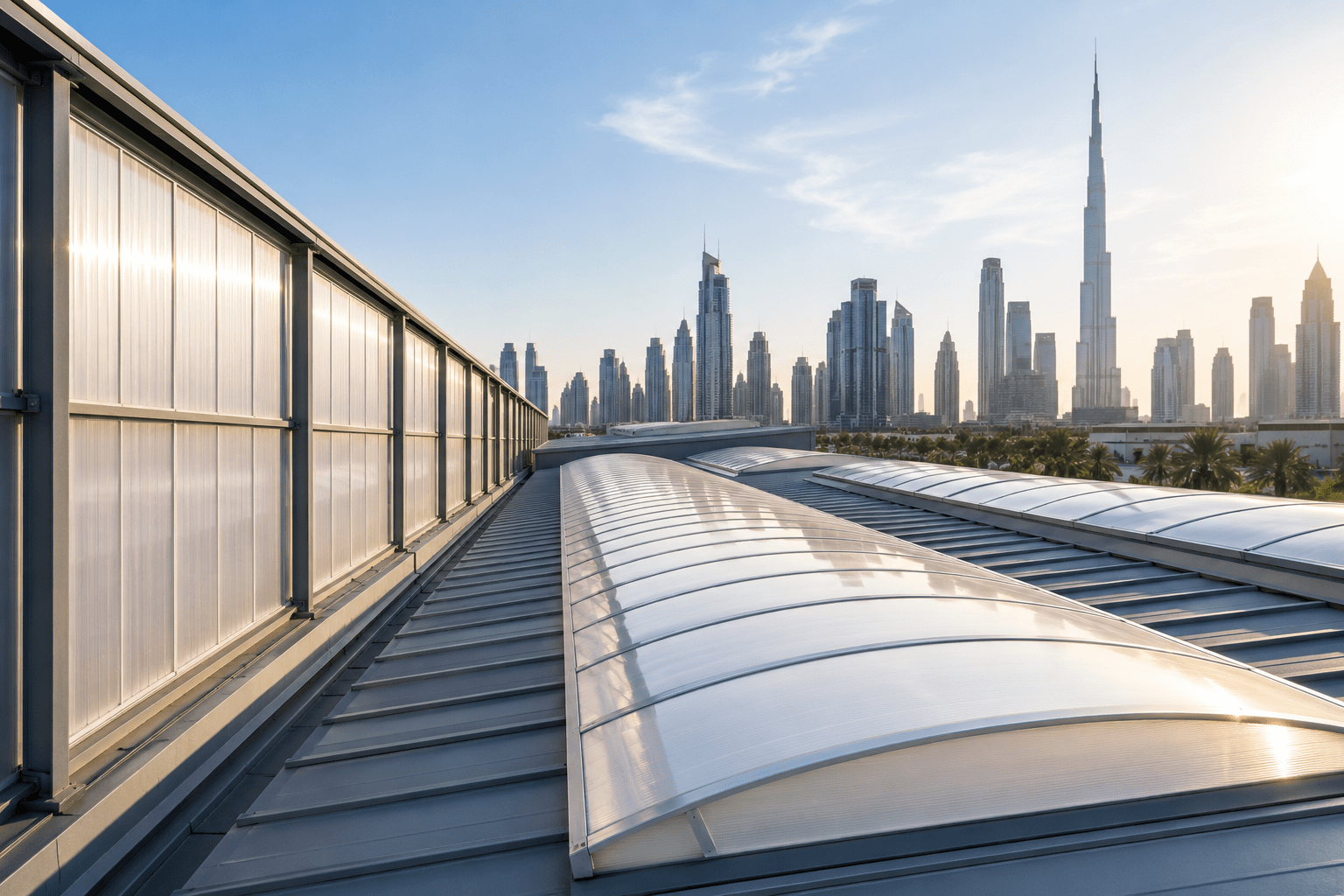
This has accelerated the adoption of advanced daylighting materials such as:
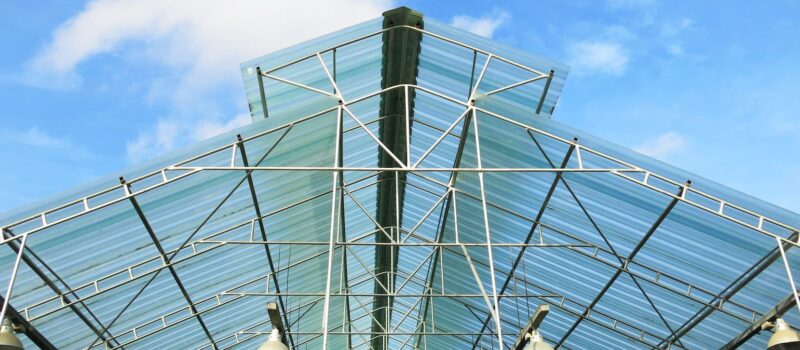
- Multiwall polycarbonate systems
- Thermally broken skylight assemblies
- Insulated GRP daylight panels
- Standing seam daylighting systems
- Translucent façade cladding systems
These technologies help architects introduce natural light while maintaining energy performance targets required by Dubai regulations.
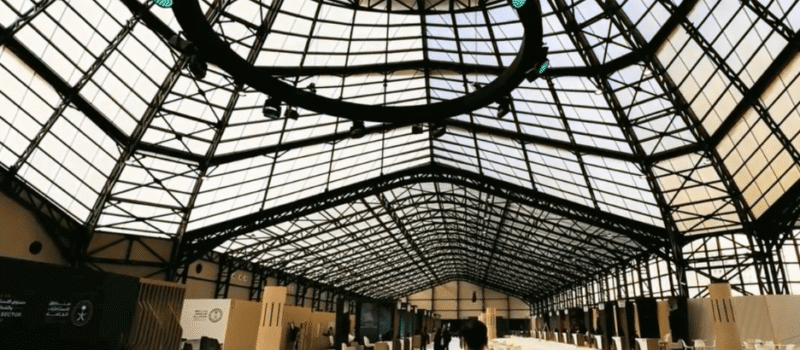
For industrial buildings, warehouses, sports halls, transportation hubs, and commercial facilities, these systems offer a practical balance between sustainability and operational efficiency.
The Growing Demand for Polycarbonate Daylighting Systems
Polycarbonate daylighting systems are becoming increasingly popular across the GCC due to their ability to combine durability, insulation, and controlled daylight transmission.
Compared to traditional glazing materials, modern multiwall polycarbonate systems provide:
- Better thermal insulation
- High impact resistance
- Lightweight installation
- UV-protected surfaces
- Enhanced light diffusion
- Reduced glare
- Long service life
For large-scale commercial and industrial projects, polycarbonate skylights and façades can also reduce structural load requirements due to their lighter weight compared to conventional glass assemblies.
In Dubai’s demanding climate conditions, this combination of durability and energy efficiency makes engineered polycarbonate systems highly suitable for sustainable construction projects.
Daylighting Through Vertical Façades
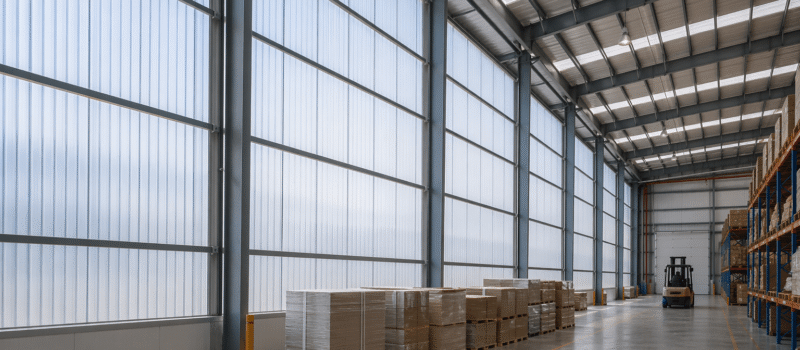
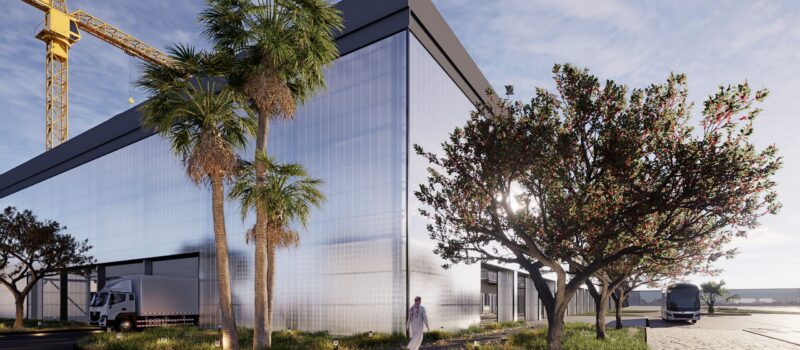
Wall daylight systems are becoming increasingly popular in Dubai because they provide natural light without exposing the roof directly to intense solar radiation.
Translucent façade systems can:
- Reduce glare
- Improve light diffusion
- Lower direct heat gain
- Create visually comfortable interiors
- Enhance building aesthetics
- Improve daylight penetration deep into buildings
In industrial facilities, warehouses, sports halls, and logistics centers, vertical daylighting often provides a more energy-efficient alternative to excessive roof glazing.
Modern translucent façade systems using advanced polycarbonate technologies can achieve:
- Excellent thermal insulation
- Uniform daylight distribution
- Reduced shadowing
- Better occupant comfort
- Lower artificial lighting demand
This makes them highly suitable for sustainable projects across Dubai and the wider GCC region.
Energy Efficiency and HVAC Performance
One of the biggest misconceptions in daylighting design is assuming that more daylight automatically improves sustainability.
In reality, uncontrolled daylight can increase cooling demand significantly.
Dubai’s Green Building Regulations indirectly encourage optimized daylighting strategies where:
- Artificial lighting demand decreases
- Cooling demand remains controlled
- Occupant comfort improves simultaneously
- Building energy consumption is minimized
A properly engineered skylight system should contribute positively to the building’s total energy model.
The objective is not maximum sunlight.
The objective is optimized daylight.
This distinction is extremely important in hot climate architecture.
Importance of Material Selection
The choice of daylighting material plays a major role in long-term building performance.
For Dubai’s harsh climate conditions, materials must withstand:
- High UV exposure
- Sand abrasion
- Thermal expansion
- Extreme temperature fluctuations
- Humidity
- Long operational life cycles
This is why advanced polycarbonate and engineered GRP systems have become widely adopted in modern construction projects.
Compared to older acrylic or fiberglass solutions, modern systems typically offer:
- Better thermal stability
- Improved UV protection
- Lower maintenance requirements
- Enhanced impact resistance
- Superior light diffusion
- Longer service life
Selecting high-quality materials early in the design process can significantly reduce future maintenance and replacement costs.
Fire Performance Considerations
Fire safety remains a critical consideration for skylight and façade systems.
Depending on the project type and authority requirements, daylighting systems may need compliance with standards such as:
- ASTM E84
- EN 13501-1
- BS 476 Part 7
Modern engineered daylighting systems are increasingly developed to meet stricter fire reaction classifications while maintaining optical performance.
This has become particularly important in:
- Airports
- Industrial facilities
- Logistics hubs
- Government projects
- High occupancy buildings
- Transportation infrastructure
As building codes evolve across the GCC, fire performance requirements are expected to become even more stringent.
Sustainability Certifications and Green Building Goals
Beyond local regulations, many Dubai projects also pursue sustainability certifications such as LEED and Estidama.
High-performance daylighting systems can contribute toward credits related to:
- Indoor environmental quality
- Daylight optimization
- Energy efficiency
- Reduced operational energy use
- Occupant wellbeing
- Sustainable building envelope performance
This makes daylighting systems an important component in broader sustainability strategies.
For developers and consultants, selecting the right skylight or translucent façade solution can positively influence both environmental performance and project certification targets.
The Future of Sustainable Daylighting in Dubai
Dubai continues to push toward smarter and more sustainable buildings.
As energy regulations evolve, daylighting systems are becoming increasingly sophisticated, integrating:
- Advanced solar control technologies
- Higher insulation performance
- Smart glazing integration
- Dynamic daylight optimization
- BIM-integrated performance modeling
- Improved lifecycle analysis tools
Architects and consultants are no longer selecting skylights purely based on aesthetics. Performance data, energy modeling, lifecycle durability, and regulatory compliance now play a central role in specification decisions.
This shift is driving demand for engineered daylighting systems that can support both sustainability goals and long-term operational efficiency.
How DOMER Supports Sustainable Daylighting Solutions
At DOMER, modern daylighting solutions are designed with the realities of GCC climates in mind. High-performance polycarbonate skylight systems and translucent façade applications can help project teams achieve improved daylight quality while maintaining thermal efficiency and durability.
By focusing on controlled daylight diffusion, weather resistance, UV protection, and long-term performance, advanced daylighting systems can contribute to more sustainable and energy-efficient buildings throughout Dubai and the wider Middle East.
For architects, consultants, contractors, and developers, selecting engineered daylighting systems early in the project lifecycle can significantly improve building performance and long-term operational outcomes.
Final Thoughts
Skylights and wall daylight systems play an essential role in sustainable architecture across Dubai and the GCC region. However, successful daylighting design in hot climates requires far more than simply introducing natural light into a building.
The most effective systems are those engineered to balance:
- Daylight quality
- Thermal efficiency
- Solar control
- Occupant comfort
- Long-term durability
- Regulatory compliance
As Dubai’s Green Building Regulations continue to shape the future of construction, high-performance daylighting systems will remain essential components of energy-efficient and environmentally responsible buildings.
For project teams, selecting the right daylighting solution early in the design phase can significantly improve both building performance and long-term operational efficiency.